


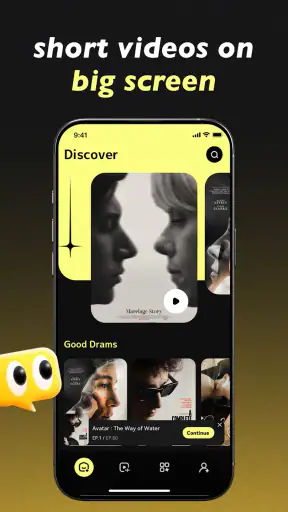
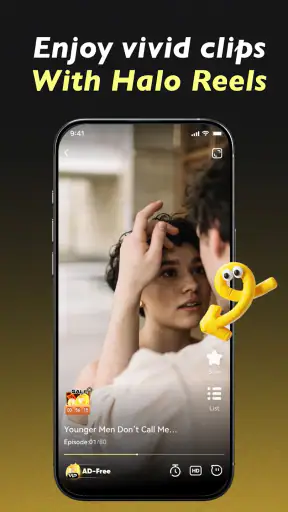
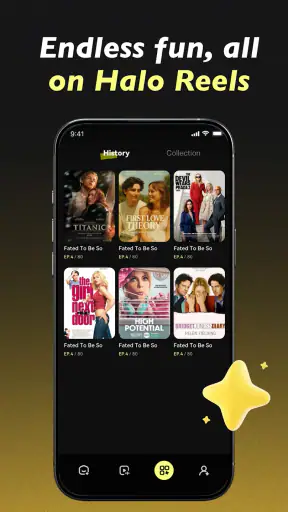
I opened Halo Reels looking for something lighter than a full television episode but more satisfying than endlessly swiping through disconnected clips. That starting point matters, because this entertainment app is built around short stories and quick emotional payoffs rather than long-form viewing. My first impression was that it understands the “I have a few spare minutes” moment very well, although it also asks you to accept the limits that come with bite-sized storytelling.
The app comes from Nutri Plaza and is free to install, which makes trying it an easy decision. It is aimed at Teen users, so I would treat it as a better fit for older teenagers and adults than for young children. The current version is 1.0.2 and works on Android devices running version 6.0 or later. Those requirements are modest enough that compatibility should not be a major obstacle for many people with older phones.
What interested me most was not simply the promise of short content, but the way a short-story service fits into an ordinary day. I could imagine opening it while waiting for an appointment, during a commute, or at the end of the evening when I wanted a small piece of entertainment without committing to a film. The real strength is convenience, not depth, and understanding that distinction will help you decide whether it belongs on your phone.
From a spare minute to a complete viewing session
The starting condition: choosing something when attention is limited
Many entertainment apps begin with a large library that demands a decision before anything happens. You browse categories, compare runtimes, read descriptions, and sometimes spend longer choosing than watching. Halo Reels feels suited to the opposite situation: I arrive with limited time and want the app to help me get moving quickly.
That makes it particularly useful for small gaps in the day. If I have ten minutes before leaving home, I do not need to begin a complicated series or remember where I stopped in a long episode. A short story can provide a clear beginning and an emotional destination within a compact session. The format also works when my attention is divided, although I would not confuse that convenience with content that is safe to ignore completely.
The Teen age rating is worth considering before handing the phone to a younger family member. Parents should make their own judgment about whether the tone and themes suit a particular child, especially because short dramatic content can move quickly from setup to conflict. I would use the app with an older teen or adult in mind rather than treating it as a general children’s video service.
The step-by-step flow: open, sample, continue
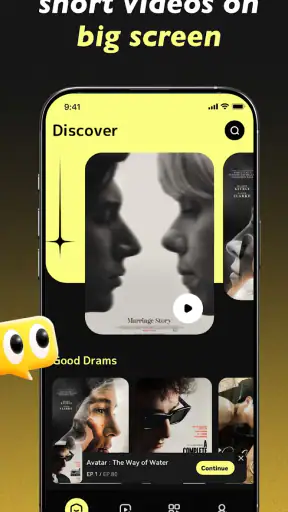
My practical approach was to treat each visit as a small viewing workflow. I opened the app, looked for a story that matched my available time and mood, watched enough to decide whether the premise held my attention, and then chose between continuing and moving on. That sounds simple, but it is a useful discipline for short-form entertainment because the abundance of quick choices can otherwise turn into passive scrolling.
I recommend deciding your purpose before opening it. If you want romance, suspense, or an emotional story, keep that in mind while browsing instead of accepting the first attractive thumbnail or opening scene. If you only have a few minutes, choose something that can stand alone within that window. If you have longer, allow yourself to follow a story across multiple visits, but remember where you stopped so the next session begins intentionally.
This is one of the less obvious trade-offs of the format: short episodes reduce the commitment required to start, but they can also encourage a “just one more” loop. I found the app more enjoyable when I used it as a planned break rather than as background noise. The stories are easier to appreciate when I give them a little attention, particularly during dialogue or turning points that would lose their effect if I kept switching to another app.
For a realistic everyday example, imagine finishing a lunch break with eight minutes left. A traditional streaming service might tempt you to start an episode that you cannot finish, while a social video feed might offer random clips with no satisfying conclusion. Halo Reels sits between those options. I can choose a short narrative, watch a meaningful portion, and return to work without carrying the unfinished structure of a long program in my head.
Managing the handoff between one story and the next
The handoff is where this kind of app succeeds or becomes tiring. Moving from a finished story to another should feel like a clean choice, not an obligation to keep consuming. I found it helpful to pause after each story and ask whether I actually wanted another one. That small break prevents the app from deciding the shape of my entire evening.
Short stories also create a different kind of continuity problem. A long show gives you time to settle into its world, while a compact story has to establish its characters and conflict quickly. If I left halfway through, I sometimes needed a moment to remember the emotional context before continuing. For that reason, I would avoid beginning a story immediately before an interruption unless I was comfortable restarting a section or accepting a less focused return.
Another useful handoff is from phone viewing to a more deliberate session. I would start with one story during a spare moment, then continue later when I could pay closer attention. That workflow works best when I resist treating every recommendation as equally urgent. The app is more pleasant when I select content as a viewer, not when I let an endless sequence make every decision for me.
Where the free model changes the decision
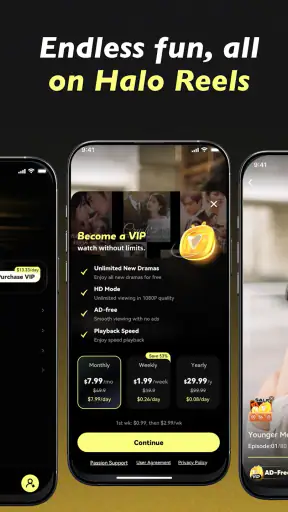
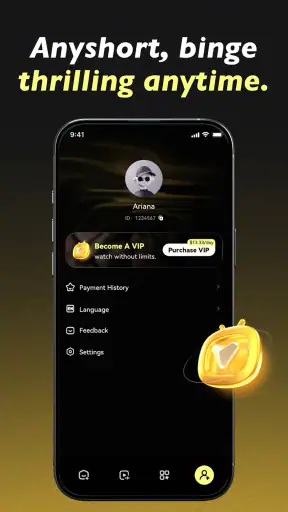
Halo Reels is free to use, but the experience includes in-app purchases priced from $7.99 to $29.99 per item. That does not automatically make the app poor value, yet it does change how I would approach it. I would explore the free experience first, learn how often I return, and only then consider spending money. A purchase should solve a clear problem for me, such as improving access to stories I genuinely want to finish, rather than being an impulse response to a cliffhanger.
This is especially important for families sharing a device. Because the app carries a Teen rating and includes paid items, I would keep purchases under adult control and set a personal limit before browsing. Even when the initial download costs nothing, short-form entertainment can make small decisions feel urgent. A deliberate budget keeps the app in the category of casual entertainment instead of allowing it to become an unplanned recurring expense.
Compared with a conventional subscription streaming service, the appeal here is the lower commitment at the starting point and the focus on short stories. A subscription platform is usually better when I want a broad catalog, long episodes, films, or dependable access to established viewing habits. Compared with a social video feed, Halo Reels is more appealing when I want narrative structure rather than isolated clips. The trade-off is that it may feel less flexible to someone who prefers documentaries, live content, user-created variety, or very long stories.
The result: what I actually get from a session
The outcome of a good session is not hours of viewing. It is a compact emotional experience that fits around the rest of the day. I can finish a short story, feel that I reached a proper stopping point, and put the phone away. That sense of completion is the clearest reason I would recommend trying it to someone who often lacks time for traditional television.
The app’s popularity suggests that this format has found a substantial audience: it has passed five million installs and holds a 4.8 average from around 122 thousand ratings. I would not use those figures as proof that every story will suit me, but they do indicate that the short-story approach has broad appeal. My own judgment is more specific: it works when I want a quick narrative, not when I am searching for a complete replacement for every other entertainment service.
One practical benefit is the reduced planning burden. I do not need to reserve a full evening or remember a complicated plot before opening the app. That makes it useful after a tiring day, when I want something with a little more shape than random scrolling but do not have the energy for a demanding film. It can also be a good companion for travel pauses, provided I have enough battery and a comfortable way to watch.
There is a social handoff too. I could recommend a particular short story to a friend more easily than I would recommend an entire series requiring many hours. The conversation becomes about a specific premise or feeling rather than a large commitment. Still, I would describe the experience honestly: “This is a quick story app,” not “This replaces your streaming library.” That distinction sets the right expectation.
Where the flow breaks
The workflow breaks when I want control and depth that short-form entertainment is not designed to provide. If I am in the mood for a slow character study, a complex mystery, a full-length comedy, or a documentary that develops an argument carefully, I would choose a different service. Halo Reels can deliver a concentrated moment, but concentration is not the same as richness.
It can also break when I open the app without a stopping rule. The ease of beginning another story is convenient, but it can turn a planned five-minute break into a much longer session. My advice is simple: decide whether you are watching one story or browsing for a limited time before you start. That small boundary is more useful than expecting the app itself to manage your attention for you.
Another friction point is the relationship between free access and paid items. Users who dislike any purchase prompts or who want one predictable payment may prefer a traditional service with a clearly defined subscription. On the other hand, people who only watch occasionally may appreciate being able to try the app without paying at the door. The better choice depends on your viewing frequency and your tolerance for optional spending, not just on the download price.
The Teen rating also narrows the audience. I would not install it as a default entertainment option for a small child, and I would check the experience personally before recommending it to a younger teenager. For adults, the rating is less of a concern, but it still signals that the app should be approached as general teen-and-up entertainment rather than a child-focused library.
Small habits that make the app work better
My first tip is to match the story length to the gap in your schedule. Do not begin a multi-part narrative when you know you have only a minute or two. A rushed ending weakens the experience and makes the app seem less satisfying than it is. Save those stories for a period when you can give them a continuous stretch of attention.
My second tip is to separate discovery from viewing. Use one session to sample and decide, then return later to watch with fewer interruptions. This avoids spending the entire break browsing and gives the stories a fair chance. It is a surprisingly important distinction because the app’s value comes from reaching the story, not merely from seeing an attractive selection of possibilities.
My third tip is to treat purchases as a later decision. Start free, notice which kinds of stories you actually finish, and consider whether paid access improves your personal routine. If you rarely return, spending money will not fix that. If you become a regular viewer, a purchase may feel more reasonable, but only after you understand what you are buying and have set a limit that fits your budget.
A fourth tip is to use the app for transitions rather than avoidance. It is ideal for the space between activities: waiting, winding down, or taking a deliberate break. It is less helpful when I use it to postpone something important. The short format makes that avoidance easy because every new story feels manageable, so I keep my sessions intentional.
Who should install it, and who should skip it
I would recommend Halo Reels to people who enjoy emotional, compact storytelling and often have only a few minutes available. It makes particular sense for viewers who find full streaming episodes too demanding and ordinary social feeds too random. The free entry point also makes it easy to test without committing to a long subscription immediately.
I would be more cautious recommending it to someone who wants a large, predictable catalog of films and series, dislikes optional purchases, or prefers content that can play in the background without requiring attention. It is also not my first choice for young children because of the Teen rating. For those viewers, a child-focused service or a conventional platform with stronger household controls may be a better fit.
Nutri Plaza has kept the app’s technical entry requirements approachable, and the current release is 1.0.2, so I would check that a device is running Android 6.0 or later before attempting installation. Once installed, I would judge it by the quality of my own sessions rather than by its popularity alone. A high average rating and a large install base are encouraging, but the format still needs to match your habits.
My final take after following the whole workflow
Halo Reels works best as a focused pocket of entertainment: I arrive with a small amount of time, choose a short story, watch through a meaningful arc, and leave before the session becomes automatic. That complete workflow is more satisfying than random scrolling, while remaining less demanding than a full episode or film. The app earns its place through convenience and emotional immediacy.
Its weaknesses are equally clear. Short stories cannot replace long-form depth, optional purchases require self-control, and the Teen rating means it is not a universal family app. I would also avoid opening it without a plan if I am trying to protect my time. Those are not deal-breakers, but they are part of the honest trade-off.
My recommendation is to try the free experience when you want narrative entertainment that fits into the edges of your day. Give it a fair test using a planned session, compare the result with your usual streaming or social-video habits, and only think about in-app purchases after you know you will return. For me, Halo Reels is most successful when it stays small, intentional, and easy to finish.


